
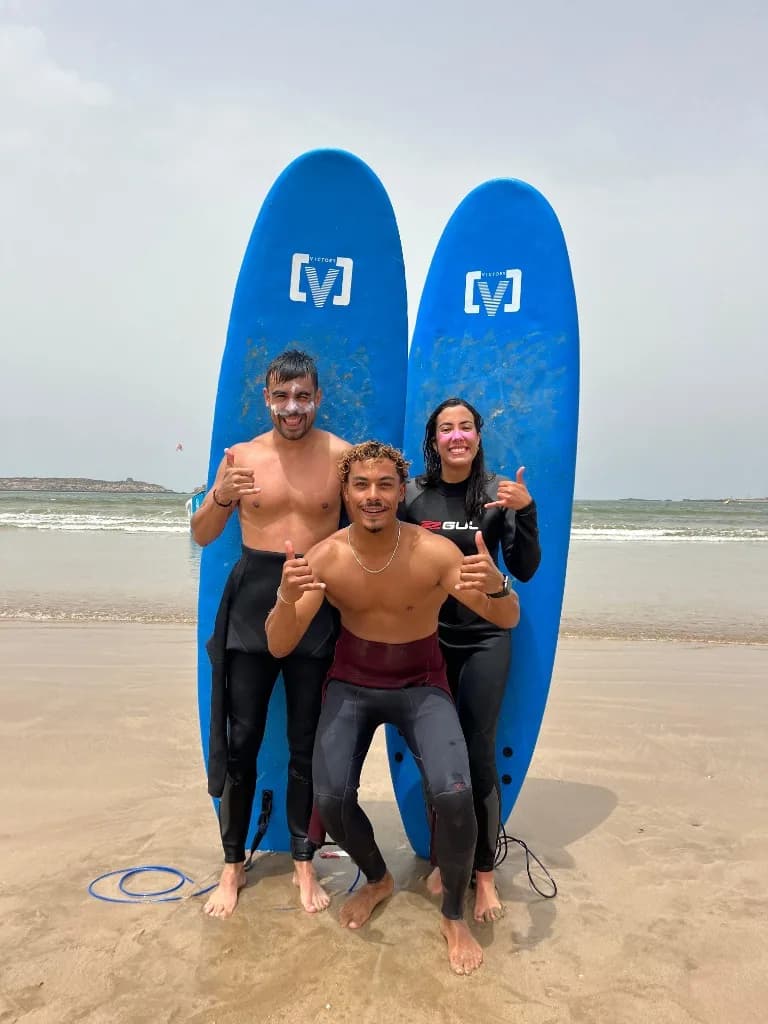
Surfing Essaouira is one of Morocco's best-kept secrets. While Taghazout and Agadir draw the crowds, the Windy City offers something different: a wide, sheltered bay with a sandy bottom, consistent Atlantic swells, and a UNESCO-listed medina where surf culture meets Gnawa music and fresh fish. Whether you're learning to surf for the first time or you're an intermediate surfer looking for mellow waves and fewer people in the line-up, surfing Essaouira delivers. This guide covers everything – the waves, the best time to go, the main spots, what a typical surf lesson looks like on the beach, and how to combine your surf trip with the town's unique culture. By the end you'll know why so many surfers choose Essaouira for their first Moroccan surf experience and why plenty come back year after year.
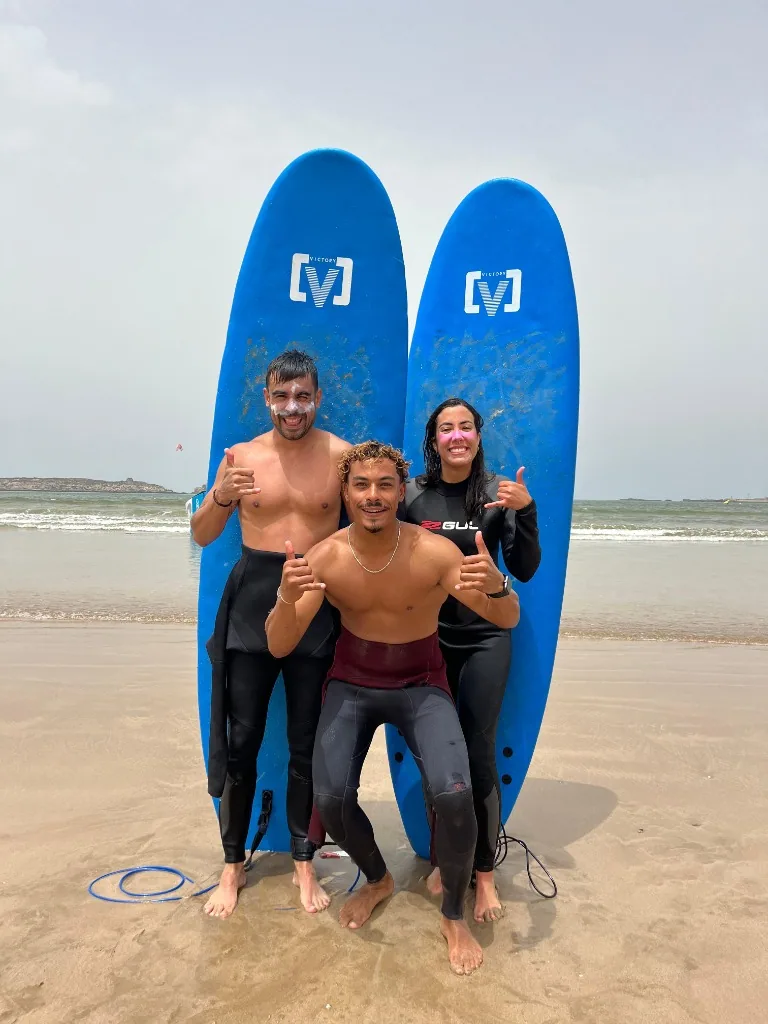
Why Surfing Essaouira Works: The Bay and the Waves
Essaouira sits on Morocco's Atlantic coast, about two and a half hours west of Marrakech. The town faces a broad bay that acts like a natural classroom: the horseshoe shape softens the swell, the bottom is sand from the beach out to the break, and there's no reef to worry about. When you're surfing Essaouira you're riding the same Atlantic energy that powers the rest of the Moroccan coast, but in a safer, more forgiving setup. Beginners can practise pop-ups and trim in the white water; intermediate surfers can paddle out to the green waves. The bay is big enough that several surf schools and independent surfers can share it without crowding. That's why surfing Essaouira has become such a popular choice for learn-to-surf trips and surf camps – you get real ocean conditions without the stress of heavy reef breaks or packed line-ups.
Surfing Essaouira is at its best in the morning. The famous Alizés wind – the same north-easterly that makes the town a kitesurfing hub – is usually light until late morning. That means glassy or near-glassy conditions from first light until around 11am, perfect for learning and for long, clean rides. By midday the wind often picks up, the surface gets choppy, and many surfers head in while the kites come out. So the golden rule for surfing Essaouira is simple: surf early. Whether you're with a surf school or on your own, plan to be in the water by 8 or 9am. That way you get the best of both worlds – smooth waves for surfing Essaouira in the morning, and the option to switch to kite, explore the medina, or relax in the afternoon.
A Brief History of Surfing in Essaouira
Surfing Essaouira didn't start with tourism. Local fishermen and a handful of pioneers were riding the bay long before the first surf schools opened. In the 1990s and 2000s, as Morocco became a recognised surf destination, Essaouira began to attract riders who wanted something different from the more famous spots up the coast. They found a town that was already used to wind and water – the port, the boat builders, the Gnawa musicians – and a bay that was ideal for learning and for mellow sessions. Today surfing Essaouira is part of the town's identity. Surf schools line the beach, surf camps offer week-long packages, and the mix of surf in the morning and culture in the afternoon has become the classic Essaouira formula. When you're surfing Essaouira you're part of that story: a place where waves, wind, and culture have grown together.
The Windy City: More Than Just a Nickname
Essaouira is often called the Windy City (or the City of the Trade Winds). The Alizés blow consistently from spring to autumn, which is why kitesurfing and windsurfing are so popular. For surfing Essaouira, that same wind is the reason you surf in the morning – before it gets strong. The town has learned to live with the wind: the medina's narrow streets offer shelter, the port is protected by the bay, and the beach is wide enough that there's always a corner where the conditions are workable. So when you plan a surf trip to Essaouira, think of the wind as a feature, not a problem: it shapes the rhythm of the day and makes the morning surf window all the more valuable. Surfing Essaouira in the glassy hours and then watching the kites fill the sky in the afternoon is one of the best ways to experience the Windy City.
When to Surf Essaouira: Seasons and Time of Day
Surfing Essaouira is possible year-round, but the seasons change the water temperature, the swell, and the crowd level. Spring (March to May) and autumn (September to November) are widely considered the best windows for surfing Essaouira: the water is warm enough for a 3/2mm wetsuit, the Atlantic swell is consistent, and the number of tourists is lower than in summer. Many surf schools and surf camps report that these months offer the best balance of waves and comfort. Summer (June to August) is peak season. The town is busy, the water is at its warmest (some riders use a shorty or even a rash vest), and the swell is reliable – but you need to book surf lessons and accommodation in advance. Surfing Essaouira in summer means sticking to the morning slot; by noon the wind is often strong. Winter (December to February) is cooler. You'll want a 4/3mm wetsuit and possibly boots. The reward is often the best waves of the year and a much emptier line-up. Surfing Essaouira in winter is for those who don't mind the cold for the sake of quality and solitude.
Whatever the season, the time of day matters most. Surfing Essaouira is a morning activity. Plan to be at the beach by 8am or 9am; most surf lessons start in that window. By 11am or noon the wind usually has picked up enough to make the surface choppy. So even in summer, when the days are long, the best surfing Essaouira happens in the first few hours after sunrise. Check the forecast and listen to your surf school – they know the bay and will tell you the best slot for the day.
The Main Bay: Your Playground for Surfing Essaouira
The main bay in front of Essaouira is where most surfing Essaouira happens. It's a long, sandy beach with no rocks or reef in the main area. The swell comes in from the Atlantic and breaks in a series of peaks that shift with the sandbanks and the tide. Beginners typically stay in the white water close to the shore: the waves are already broken, the water is shallow, and instructors can stand next to you to help with pop-ups and balance. As you progress, you'll paddle further out to catch unbroken waves. The bay is large enough that there's space for everyone – surf schools have their designated zones, and independent surfers spread out along the beach. Surfing Essaouira in the main bay is safe because of the sandy bottom: if you fall, you're not landing on reef or rocks. That makes it ideal for learning and for building confidence.
Because the bay faces the ocean, it receives swell from a wide range of directions. In practice that means there are rideable waves on most days, even when other spots on the coast are flat or too big. Surfing Essaouira doesn't require huge swell – the bay works with small to medium conditions, which is another reason it's so good for beginners and for consistent practice. Your surf school will choose the best section of the beach for the day based on tide, wind, and swell direction. If you're surfing Essaouira on your own, take a moment to watch where the schools set up and where the peaks are breaking; that will save you a lot of paddling.
Beyond the Bay: Sidi Kaouki and Other Spots for Surfing Essaouira
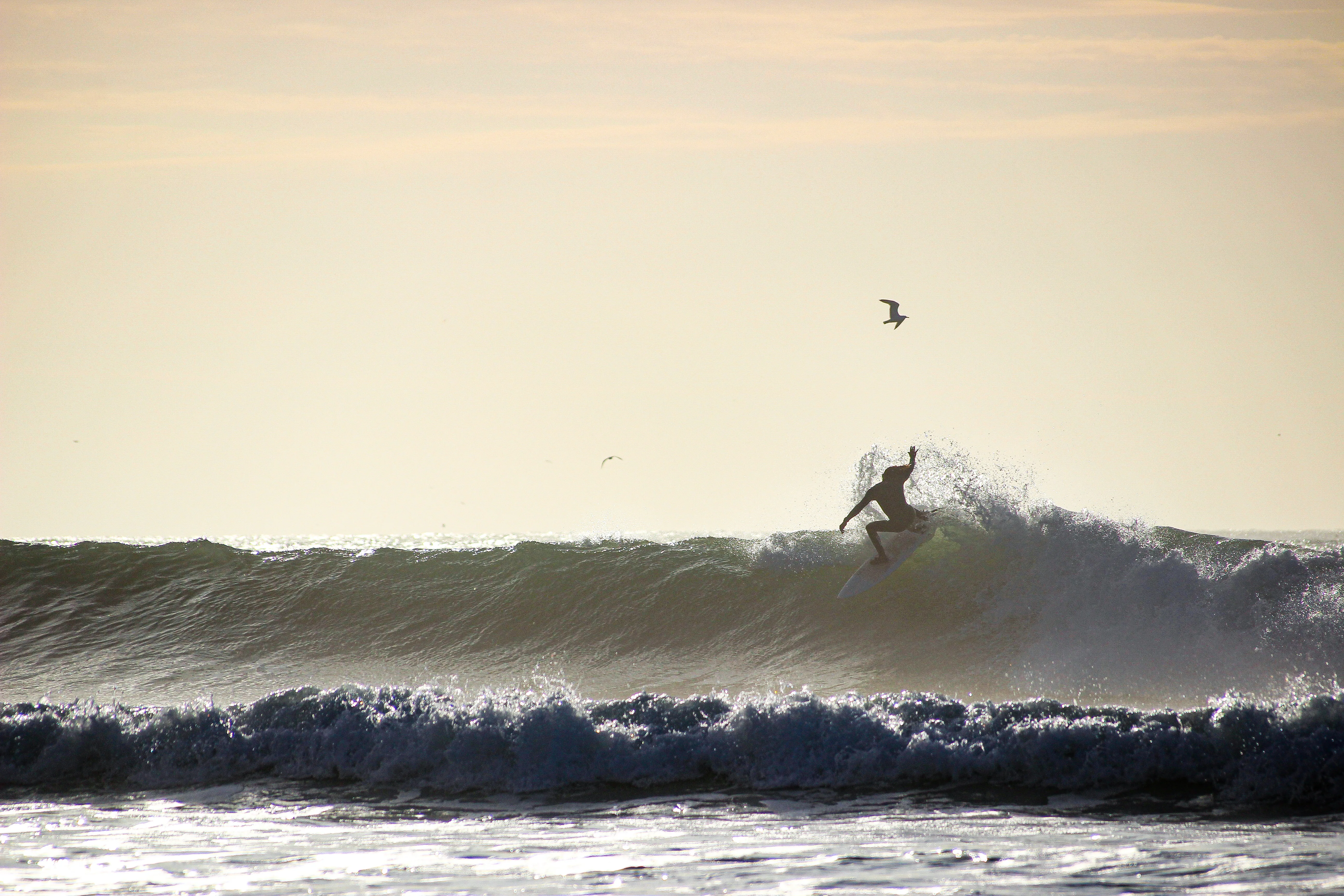
Once you're comfortable in the main bay, you might want to explore other spots. Sidi Kaouki is the most famous: a village and beach about 25 km south of Essaouira. The waves there are often stronger and more powerful than in the bay, and the vibe is more remote – fewer people, more wind, and a string of cafés and surf camps along the coast. Surfing Essaouira in the bay is your foundation; surfing at Sidi Kaouki is often the next step for intermediate surfers. Many surf schools offer day trips or transport to Sidi Kaouki for students who are ready. If you're on a surf camp, ask if they include sessions there. The drive takes about 30–40 minutes, and the conditions can be different from the bay – more exposed, sometimes bigger, so it's best to go with someone who knows the spot.
North and south of Essaouira there are other beaches and points that work in the right swell and wind. Locals and experienced surfers use them; for a first trip focused on surfing Essaouira, the main bay and possibly Sidi Kaouki are usually enough. As you get to know the coast, you can explore further. The key is to build your skills in the safe, sandy bay first – then take your surfing Essaouira journey to the next level with a visit to Sidi Kaouki or other spots with a guide or a school that knows the area.
What a Surf Lesson in Essaouira Looks Like
If you've never surfed before, or if you want to improve quickly, a surf lesson in Essaouira is the way to go. Most lessons follow a similar structure. You meet your instructor and group at the beach (or at the school, then walk or drive to the beach). You start on the sand: a short safety brief (rip currents, how to hold the board, where you'll be surfing), then a demo of the pop-up – the move that takes you from lying on the board to standing. Students practise the pop-up on the beach a few times so the motion becomes familiar. Then you grab your board and wetsuit and head into the white water. The instructor will position you in shallow water where the broken waves roll in. You'll paddle, feel the wave push you, and practise popping up and riding the white water toward the beach. Most beginners stand up on their first or second lesson. The bay's gentle, rolling waves and soft bottom make it forgiving. By the end of a 2–2.5 hour session you'll have had dozens of attempts and plenty of feedback from your instructor.
Surf lessons in Essaouira typically include a wetsuit (3/2mm most of the year, 4/3mm in winter) and a soft-top (foam) board. Soft boards are stable and safe – no sharp fins to worry about when you're learning. Groups are usually small (four to six people per instructor) so everyone gets attention. The best schools run their surf lessons in the morning when the bay is glassy. So a typical day of surfing Essaouira with a school might look like this: meet at 8:30 or 9am, brief and pop-up practice on the beach, then 1.5 to 2 hours in the water. After that you're free – rinse off, change, and head to the medina for lunch or a coffee. If you've booked a surf camp, you'll repeat that routine every morning for a week, with afternoons off for exploring, kitesurfing, or rest. That's how thousands of people each year get their first taste of surfing Essaouira and leave with a new skill and a lasting memory.
Surf Schools and Surf Camps: How to Choose
When you're looking for surf lessons or a surf camp in Essaouira, a few things matter. First, certification: IKO (International Kiteboarding Organization) or equivalent surf-teaching certification is a good sign that the school follows safety and teaching standards. Second, group size: smaller groups (around 4–6 per instructor) mean more individual feedback and faster progress. Third, equipment: check that wetsuit and board are included and in good condition. Fourth, timing: the best schools schedule surf lessons in the morning window when surfing Essaouira is at its best. Finally, local knowledge: instructors who grew up in the area know the bay, the tides, and how to read the conditions. Ask about their experience and what's included in the price (transport, insurance, equipment). A good surf school or surf camp will be transparent and will adapt the lesson to your level and the conditions. Whether you book a single lesson to try surfing Essaouira or a full week at a surf camp, choosing a school that ticks these boxes will make your experience safer and more rewarding.
Surf Camps vs Single Lessons: Making the Most of Surfing Essaouira
You can experience surfing Essaouira in two main ways: single lessons (one-off or a few sessions) or a surf camp (usually a week with daily lessons, often including accommodation and sometimes meals). Single lessons are ideal if you're passing through, if you want to try surfing once, or if you're already a surfer and just want a few sessions with a local guide. You'll get a taste of the bay and the teaching style. For real progression – going from never having stood on a board to riding green waves – a surf camp is usually better. You get daily practice, your body adapts to the movements, and the instructor can build on what you did the day before. Many surf camps in Essaouira offer 5 or 7 days of surf lessons, equipment, and a bed in a surf house or riad. That's the classic formula for learning to surf in Morocco: a week of surfing Essaouira in the morning and exploring or relaxing in the afternoon. Families, couples, and solo travellers all use surf camps; some camps run family-specific weeks with adapted lessons for kids and parents. So think about your goals. If you want to "try surfing Essaouira," a lesson or two is enough. If you want to "learn to surf in Essaouira," book a surf camp and give yourself at least five days.
Essaouira Beyond the Waves: Culture, Medina, and Food
Surfing Essaouira is only part of the story. The town is a UNESCO World Heritage site, and the medina – the old walled city – is a maze of white and blue walls, narrow streets, crafts, and cafés. After your morning surf you can spend hours wandering, shopping for leather, woodwork, and jewellery, or simply sitting with a mint tea and watching the world go by. The port is another must-see: fishing boats, fresh fish grills, and seagulls. Many visitors have lunch at the port (fish cooked to order) before heading back to the medina or the beach. Essaouira is also famous for Gnawa music – a spiritual and musical tradition that draws musicians from across Morocco and the world. Festivals and nightly performances in the medina add a unique soundtrack to your surf trip. So when you plan a week of surfing Essaouira, plan for the afternoons and evenings too: the waves in the morning, the medina and the port in the afternoon, and the music and the restaurants at night. That combination is what makes surfing Essaouira more than just a surf trip – it's a full cultural and sporting experience.
The town is compact and safe. You can walk from the beach to the medina in a few minutes. Most surf schools and surf camps are based on or near the beach, so you're never far from the action. If you're travelling with family or friends who don't surf, they'll have plenty to do: beach walks, medina exploring, hammams, cooking classes, or just relaxing. Surfing Essaouira in the morning and meeting up for lunch or dinner is easy. The Windy City is used to visitors who come for the waves and stay for the culture – you'll feel welcome and well looked after.
Surf and Kite: The Perfect Day in Essaouira
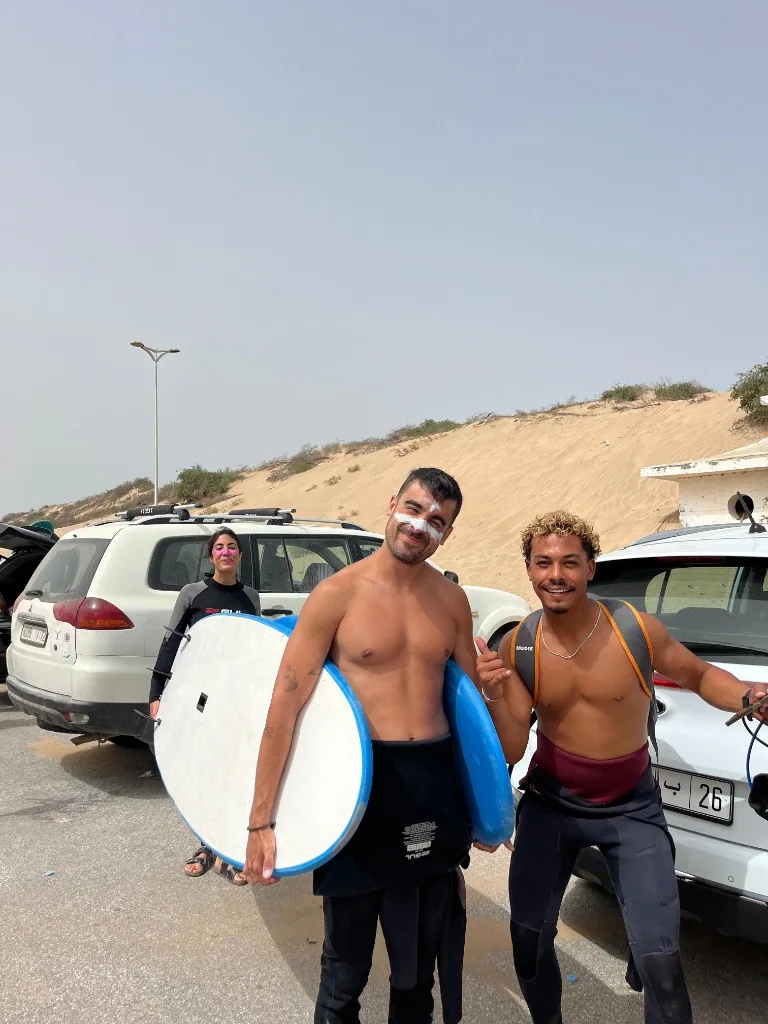
One of the unique things about Essaouira is that you can surf and kitesurf in the same day. The wind is light in the morning – ideal for surfing Essaouira – and builds in the afternoon – ideal for kitesurfing. So a typical "double session" day might look like this: surf lesson from 8:30 to 11am, then lunch and a break, then kitesurf lesson or free riding from 2pm or 3pm. Many surf schools work with kite schools or are part of a larger watersports centre, so you can book both from the same place. If you've always wanted to try both sports, Essaouira is one of the best places in the world to do it. You get glassy waves for surfing Essaouira in the morning and reliable wind for kite in the afternoon, all in the same bay. Even if you only surf, it's worth knowing that the beach is shared: in the morning it's mostly surfers, in the afternoon the kites take over. So plan your surfing Essaouira for the morning and you'll have the best conditions and the right space.
Practical Guide: Where to Stay, What to Bring, and Safety
Where to stay when you're surfing Essaouira? Most visitors stay in the medina (riads and guesthouses) or in the newer town near the beach. If you're on a surf camp, accommodation is often included – a surf house or a riad used by the school. If you're booking your own stay, choose something close to the beach if you want to walk to your surf lessons, or close to the medina if you prefer the atmosphere and don't mind a short walk or taxi. The town is small, so nothing is very far. What to bring: for surf lessons you don't need a board or wetsuit – the school provides them. Bring swimwear (to wear under the wetsuit), sunscreen (reef-safe, zinc-based – the sun is strong), a towel, and a water bottle. For a longer stay add a rash vest (optional), extra sunscreen, and warm layers for after the session. In winter bring a bit more warmth for the evenings. Safety: the main bay is relatively safe – sandy bottom, no reef, and the surf schools work in designated areas. Always listen to your instructor, don't surf alone if you're a beginner, and respect the ocean. Rip currents can occur; your surf school will brief you on where to swim and how to stay safe. Surfing Essaouira is rewarding and fun when you follow basic safety rules and use a qualified school.
Month-by-Month: Surfing Essaouira Through the Year
March–May: Spring is one of the best times for surfing Essaouira. The water is warming up, the swell is consistent, and the crowds are still manageable. Perfect for surf camps and for learning. Wetsuit: 3/2mm.
June–August: Summer is peak season. Warm water, long days, and a busy town. Book surf lessons and accommodation in advance. Surf early – by noon the wind is up. Shorty or 2mm possible in high summer.
September–November: Autumn is many people's favourite. Warm water, good swell, and fewer tourists than summer. Surfing Essaouira in September or October often gives you the best of both worlds. Great for surf camps and for progression.
December–February: Winter is cooler but the waves can be excellent. You'll need a 4/3mm wetsuit and possibly boots. The line-up is quieter. Good for experienced surfers and for those who don't mind the cold for better waves.
FAQ: Surfing Essaouira
Do I need to bring my own board and wetsuit? No. Surf schools and surf camps in Essaouira provide boards (usually soft-tops for beginners) and wetsuits. You just need swimwear, sunscreen, and a towel.
What's the best time of day for surfing Essaouira? Morning, from about 8am to 11am. The wind is usually light then and the bay is glassy. Afternoon sessions are possible but the wind often makes the surface choppy.
Is the bay safe for beginners? Yes. The main bay has a sandy bottom, no reef, and manageable waves. Surf schools use designated areas and supervise beginners. It's one of the safest places in Morocco to learn to surf.
Can I combine surf and kitesurf in Essaouira? Yes. Many people surf in the morning and kite in the afternoon. The wind is light in the morning and builds later – perfect for both sports in one day.
How many days do I need to learn to surf in Essaouira? Most beginners need at least 3–5 sessions (about 6–12 hours) to stand up and ride white water consistently. A week-long surf camp is ideal for real progression and for catching green waves.
Is Essaouira good for families? Yes. The bay is safe, the town is family-friendly, and many schools offer family surf lessons and surf camps. Parents and kids can learn together in a relaxed environment.
Conclusion: Your Surfing Essaouira Journey Starts Here
Surfing Essaouira is more than a sport – it's a way to experience one of Morocco's most beautiful and welcoming towns. The bay offers safe, consistent waves for learning and for improving; the morning glass and the sandy bottom make it ideal for beginners and for those who want to progress without the stress of reef or crowds. Combine that with the medina, the port, the Gnawa culture, and the option to kitesurf in the afternoon, and you have a surf trip that's hard to beat. Whether you book a single surf lesson to try the waves or a full week at a surf camp to learn properly, Essaouira will give you memories that last. The Windy City has been welcoming surfers for decades – come and see why so many of them keep coming back. Surfing Essaouira is waiting for you.