
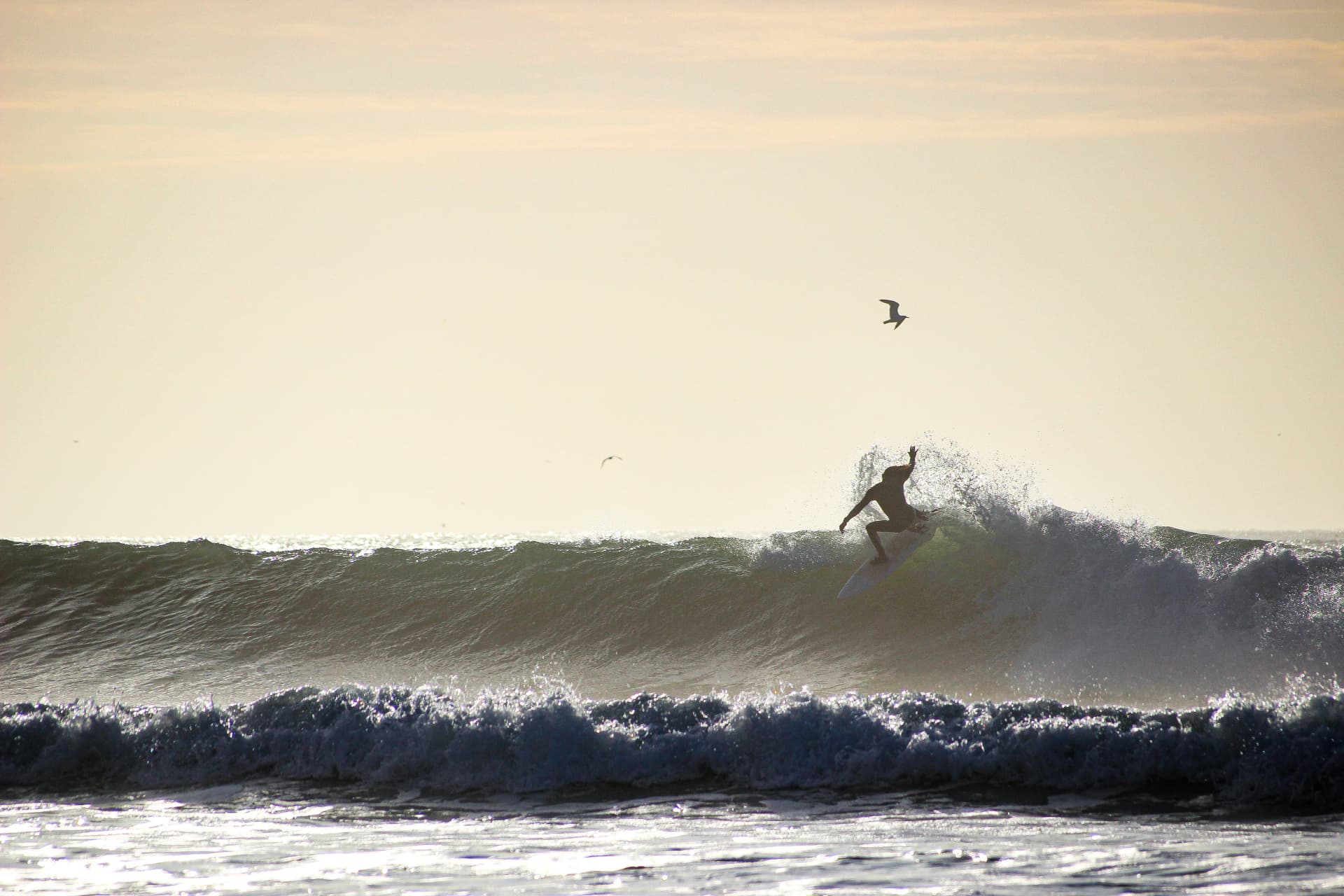
Choosing the best time to surf in Essaouira can make the difference between buttery morning peelers and a choppy afternoon slog. The Windy City sits on Morocco's Atlantic coast with a wide sandy bay, trade winds that build through the day, and swell arriving year-round from the North Atlantic. This month-by-month guide explains water temperature, typical wave size, crowd levels, wind patterns, and how to plan lessons or a surf camp so you surf when the bay is at its best.
Why timing matters in Essaouira
Unlike reef breaks that work only on specific tides, Essaouira's main bay is forgiving—but it is still wind-sensitive. The famous Alizés blow from the north-east on many days from spring through autumn. Before the wind ramps up, the bay is often glassy or nearly glassy: ideal for beginners learning to pop up and for intermediates working on trim. After late morning, the surface gets textured and kitesurfers take over. So the best time to surf in Essaouira is usually early morning, regardless of month. Schools schedule surf lessons Essaouira between 8:00 and 11:00 for that reason.
Seasonal changes affect water temperature, wetsuit choice, swell consistency, and how busy the beach feels. Winter can bring larger pulses; summer brings warmth and peak tourism. Below we walk through each part of the year so you can match your trip to your level and comfort.
January to March: winter swell and quieter line-ups
Winter is cooler—expect 16–18°C water and air that can feel brisk before noon. Most riders wear a 4/3mm wetsuit; boots are optional but nice on cold dawn sessions. Swell is often the strongest of the year: the bay still softens waves, but intermediates will find more push than in summer. Crowds are thinner outside school holidays, so this is a strong window if you already surf and want quality without summer busyness.
What to book in winter
Private or semi-private coaching helps when conditions step up. Our morning surf lessons still run in the bay; instructors choose banks with manageable size. If you are learning, winter rewards patience—one good morning can be worth two windy afternoons.
April to June: spring balance
Spring is many locals' favourite season for the best time to surf in Essaouira. Water warms toward 18–20°C; a 3/2mm suit is standard. Swell remains regular, wind is not yet at summer intensity every day, and the medina is lively without August-level queues. April and May are excellent for first trips: comfortable temperatures, consistent small-to-medium waves, and schools with availability on multi-day packages.
May and June tips
Book accommodation early for late May weekends. Combine surf with a kitesurf lesson on windy afternoons if you want both sports—Essaouira is built for that rhythm.
July to September: summer peak
Summer means warm water (often 20–22°C), long days, and the busiest calendar. July and August fill with families and European holidays; the bay works every day but mornings are essential. By 11:00–12:00 the wind frequently dominates; afternoon surf is possible but less ideal for learning. September is a sweet spot: still warm, fewer families, and swell that begins to pick up again.
Summer strategy
Reserve surf camp Morocco slots and lessons at least two weeks ahead in August. Surf before breakfast, explore the medina after lunch, and use zinc sunscreen—the Atlantic sun is strong even when the air feels cool.
October to December: autumn glass and winter preview
October and November rival spring for all-round quality: warm-ish water, solid swell, and manageable crowds. Mornings stay glassy longer on lighter-wind days. December bridges into winter: bigger sets on occasion, cooler water, empty peaks. If you want the best time to surf in Essaouira with a mix of culture and waves, autumn is hard to beat.
Month-by-month quick reference
Jan–Mar: Cooler, bigger potential, 4/3mm wetsuit, quieter beach.
Apr–Jun: Warming water, 3/2mm, ideal learn-to-surf window.
Jul–Sep: Warmest, busiest, surf 8:00–10:30, book ahead.
Oct–Dec: Excellent compromise; Oct–Nov especially recommended.
Time of day: the golden morning window
Across all months, plan to be in the water early. Tide matters less in the main bay than wind; your school will position you on the right bank. Check forecasts the night before, but trust local instructors—they read Essaouira's micro-conditions daily.
When to avoid surfing
Midday in peak summer, during rare onshore storms, or when lifeguards flag dangerous shore break. If wind is already strong at 9:00, schools may shorten land practice and focus on safety and technique on the sand.
Planning your trip around lessons and camps
First-timers should aim for at least three morning sessions across five days—progress sticks when you repeat pop-ups daily. A week-long surf camp Essaouira packages lessons, gear, and often lodging. Returning surfers can book day sessions in autumn or winter for better waves per hour in the line-up.