
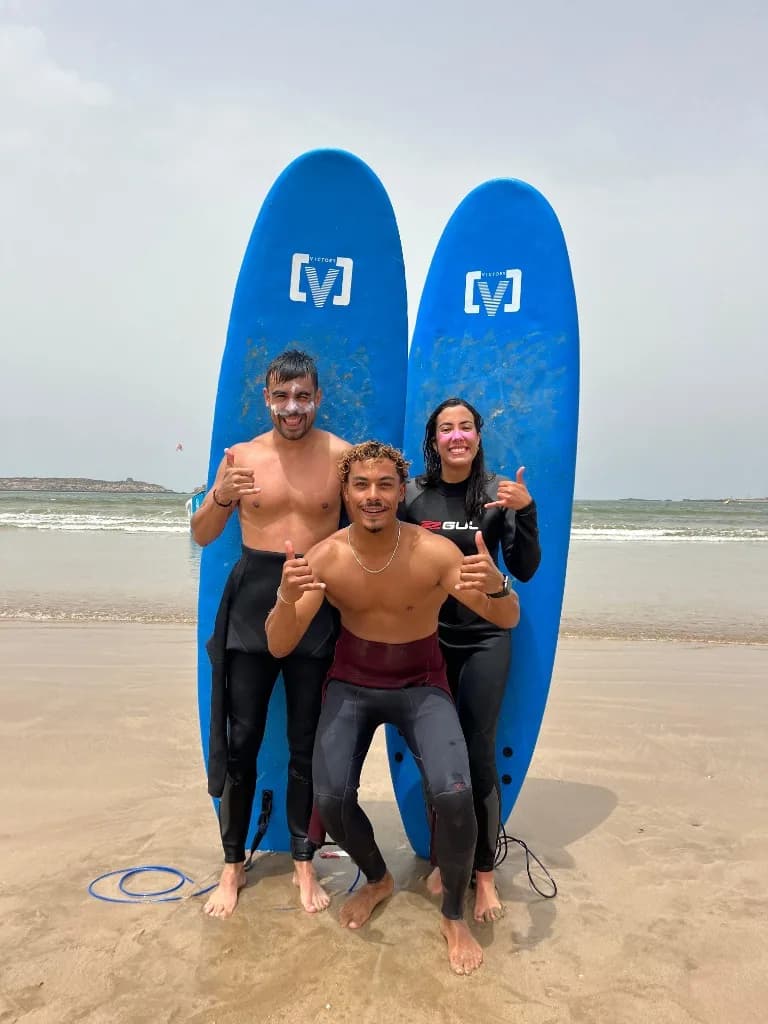
A family surf holiday in Essaouira lets parents and children share the ocean without the pressure of a heavy reef line-up. The bay’s sandy bottom, morning glass, and walkable medina mean kids can splash, teens can progress, and adults can finally take that first lesson they postponed for years—all in the same week. This guide covers suitable ages, safety systems schools use, lesson formats, accommodation tricks, and how to balance surf mornings with activities non-surfers love.
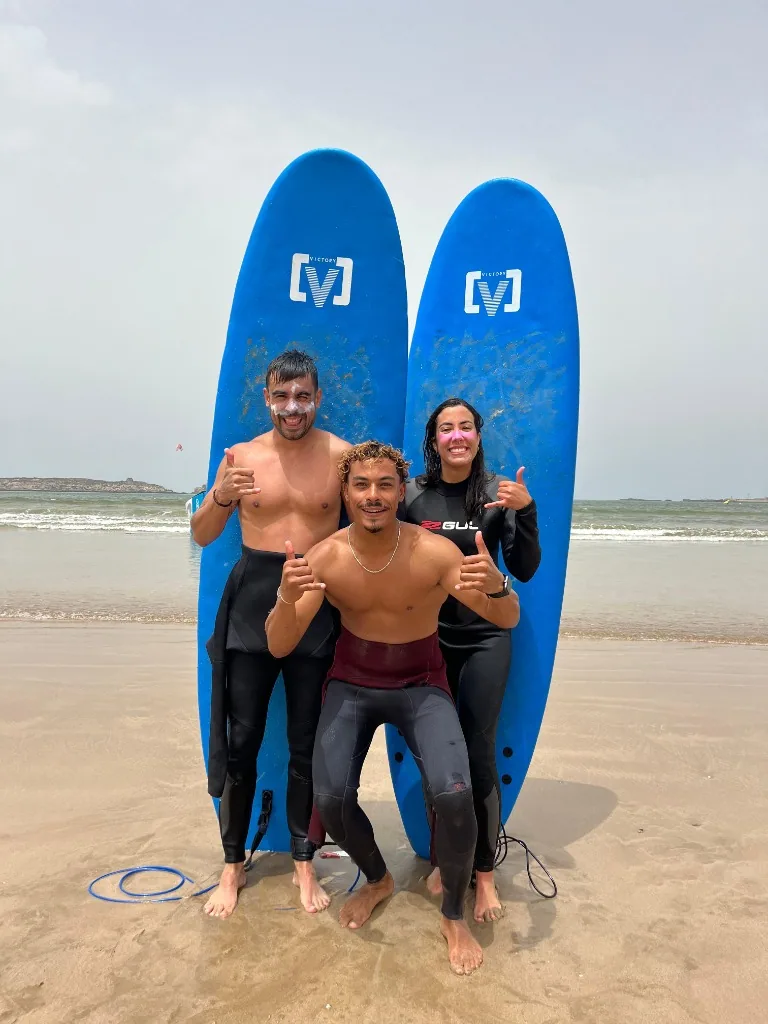
Why Essaouira works for families
Unlike exposed point villages built around advanced surf culture, Essaouira offers infrastructure families need: pharmacies, hospitals within reach, varied restaurants, calm evenings in the medina, and a beach wide enough to spread groups. Surf schools run parallel whitewater zones so children are not mixed with fast paddlers charging outside peaks. Afternoons turn windy—natural signal to leave the water, eat lunch, and explore wood workshops or the ramparts.
Culture is welcoming when dress and behaviour respect local norms. Kids see fishing boats, seagulls, and Gnawa musicians—screen-free stimulation after a morning in the waves. Many families combine one parent surfing while the other supervises sand play, then swap days—fair and sustainable.
Ages and ability: what is realistic
Ages 5–7: Short taster sessions on sand and ankle-deep whitewater with one-to-one or tiny groups; focus on fun, balance, and ocean respect rather than standing every wave.
Ages 8–12: Full family lessons with soft-tops; many children stand in session one or two with light waves.
Teens: Same technical path as adults; often progress fastest; consider semi-private coaching.
Parents 40+: Never too late; bay whitewater is ideal; communicate knee or back issues beforehand.
There is no universal minimum age—swimming confidence matters more than birthday. Child must comfortably swim in the sea with a wetsuit and follow instructions. Non-swimmers should take pool confidence classes before travelling.
Swimming and medical disclosure
Inform schools of asthma, epilepsy, hearing impairment, or anxiety. Instructors adapt proximity and rest breaks. Life jackets are uncommon in surf lessons but buoyancy aids can be discussed for nervous swimmers—ask in advance.
Safety: how schools keep families secure
Reputable schools use foam boards, leashes sized for kids, sand-depth checks, and flagged boundaries. Instructors stay in the water beside beginners. Student-to-coach ratios drop for children—look for 1:2 or 1:3 toddlers, 1:4 older kids rather than adult group sizes.
Morning scheduling avoids strong wind and kites overlapping surf zones. Briefings cover never surfing in front of rocks, holding the board nose when walking, and falling flat. Parents watch from shore but should not enter the teaching zone unless asked—confuses safety counts.
Sun protection is safety: zinc on children, rash guards, hydration. Atlantic UV reflects off water; cloudy days still burn.
Lesson formats for parents and kids
Family group lesson: Everyone learns pop-up together—bonding and shared jokes; best when children are eight plus.
Parent–child split: Kids in one instructor group, adults in another adjacent bank—parallel timing, age-appropriate coaching.
Adults only / kids club: One morning for parents, one for children with childcare on shore—rare but bookable privately.
Book family surf lessons Essaouira when available—curriculum shortens land theory for short attention spans and uses games for paddle practice. Standard surf lessons work for teens and fit parents.
Multi-day progression
Three mornings beat one epic day—children retain muscle memory through repetition without exhaustion. Day two reviews safety; day three introduces small unbroken waves if ready. Do not force teens into Sidi Kaouki until coaches approve.
Accommodation tips for families
Choose riads with family rooms or apartments with kitchenette for flexible breakfasts—kids wake hungry after surf. Proximity to beach reduces meltdown walks with wet wetsuits. Ask about cribs, extra mattresses, and pool if you need afternoon reset.
Medina riads are magical but strollers struggle on cobbles—baby carriers work better. Beach-area hotels suit early exits. Confirm hot water and heating for winter trips. Laundry access helps with sandy towels daily.
Food and mealtimes
Port fish grills thrill adventurous eaters; picky eaters find omelettes, pasta, and paninis in town. Share plates family-style. Ramadan shifts restaurant hours—plan snacks. Carry fruit and biscuits for post-surf low blood sugar.
Non-surf activities for mixed interests
Camel rides on the beach (choose ethical operators), quad tours inland with age limits, cooking classes, art galleries, beach football, and windsurfing spectating. Older teens may want afternoon kite taster lessons while parents rest—coordinate with schools for split sports.
Rain plan: hammam, museum, or café storytelling. Essaouira is compact—short walks, no endless driving with car-sick children.
Packing for parents and children
Matching rash vests, multiple towels, beach tent or umbrella, sandals with grip for medina, entertainment for airport, any familiar snacks, prescription copies, and travel insurance including watersports. Schools supply wetsuits—verify children sizes when booking. Bring favourite goggles if pool practice at home.
Common family mistakes
Booking one lesson only and expecting championship surfing. Scheduling surf at noon when wind is strong. Parents filming from the waterline in the instructor zone. Comparing siblings publicly—different pace is normal. Skipping rest days—grumpy children do not learn. Forgetting hats and water.
Budget and booking lead times
Family packages may bundle discounts for three or four people; private family coaching costs more but maximises attention. August and Easter require early booking. Shoulder seasons (May, June, September) offer weather and value balance.
Confidence that lasts beyond the holiday
Children who learn ocean respect in Essaouira carry it for life—tide awareness, listening to coaches, celebrating small wins. Parents often surprise themselves standing on day three. The goal is shared joy, not forcing every child toward competition.