
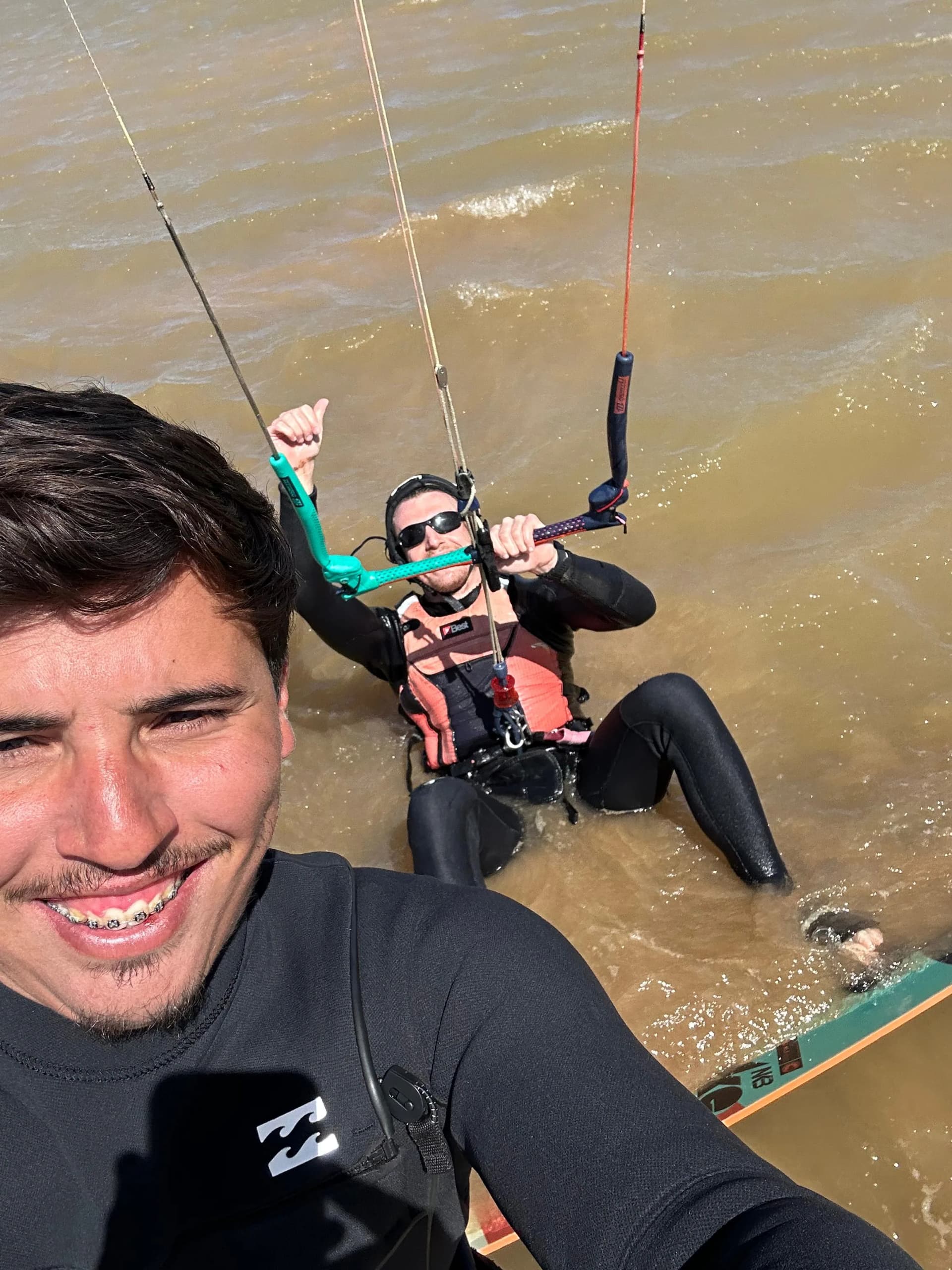
Essaouira has earned its nickname "the Wind City" honestly. Long before kitesurfing existed as a sport, sailors and traders knew this stretch of Morocco's Atlantic coast for its relentless, predictable wind — the same alizé thermal wind that now draws kitesurfers from across Europe every year. This guide covers how the wind and the bay actually work, what a beginner course involves, how to judge a kite school, what to budget, and how to plan a trip so you're not stuck waiting for wind that never comes — because in Essaouira, that's rarely the problem.
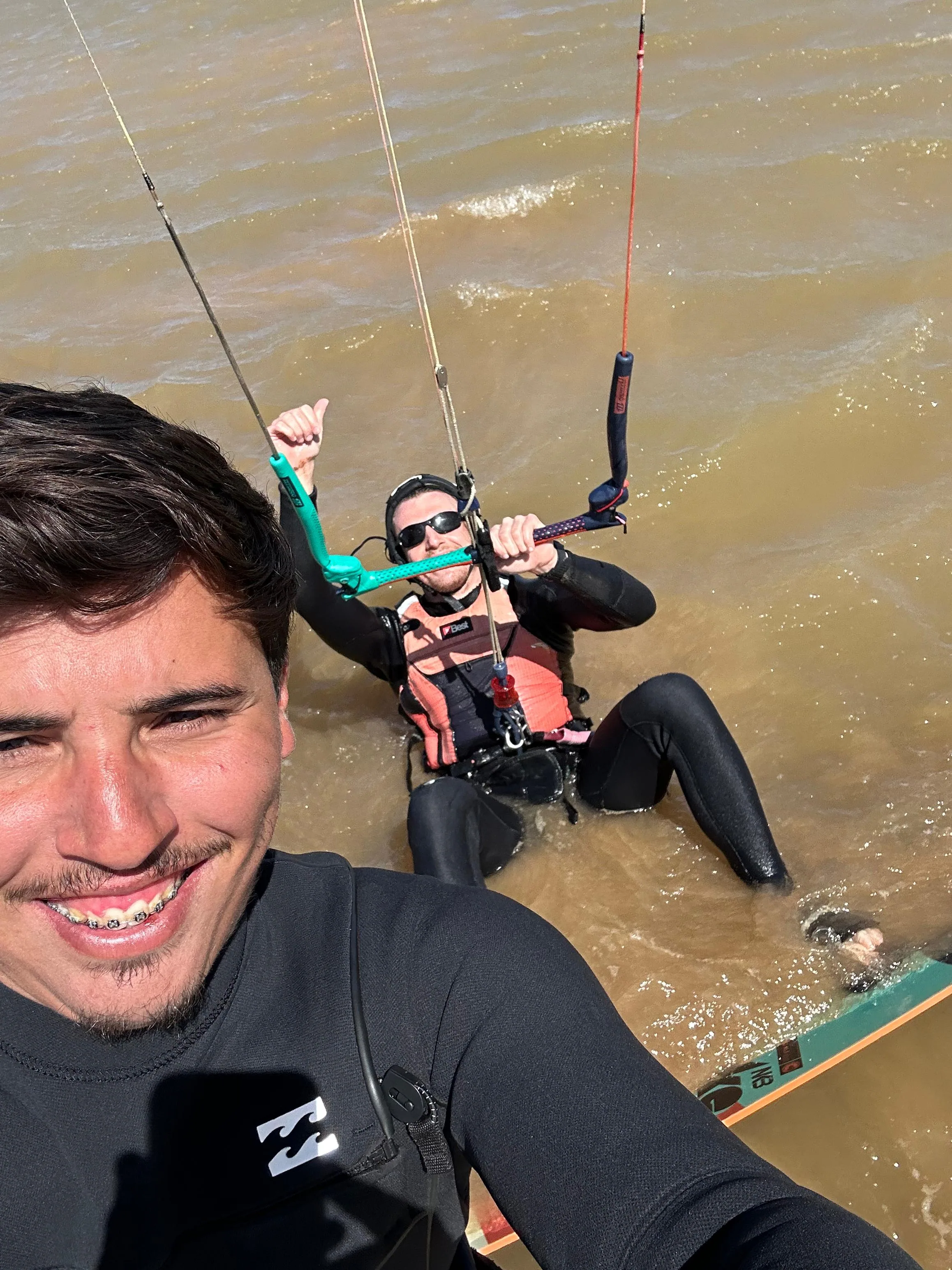
Why Essaouira Is One of Morocco's Best Kitesurf Spots
Wind you can set a schedule by
The alizé is a thermal wind generated by the temperature difference between the cool Atlantic and the warm Moroccan interior. It typically builds through the late morning, is strongest in the afternoon, and calms by evening. This daily rhythm means kite schools can plan sessions with real confidence, rather than the wind-dependent guesswork common at many spots.
A long, wide, sandy bay
The beach stretches for kilometers south of the medina walls, giving riders plenty of room to walk upwind and launch without crowding. A flat, sandy bottom also means a fall is just a fall — no reef, no rocks.
Side-shore wind direction
For most of the riding season, the wind blows roughly parallel to the beach rather than straight onshore or offshore. Side-shore wind is considered the safest and easiest direction to learn in, since a rider who loses control tends to drift along the beach rather than out to sea or into it.
A long, reliable season
While April through October is generally considered the strongest and most consistent wind window, Essaouira sees rideable wind across much of the year, which is unusual compared to more seasonal kite destinations.
Flat-water zones alongside waves
Depending on tide and exact location along the bay, riders can find flatter inside sections better suited to learning and freestyle, as well as choppier or wave-adjacent zones further out for those progressing toward wave-riding.
Understanding the Wind: What to Actually Expect
New visitors sometimes picture Essaouira's wind as a constant gale — it isn't quite that. A realistic day looks like this:
- Morning (before roughly 11am): Often light or calm, sometimes glassy — better suited to surf lessons than kiting
- Midday to early afternoon: Wind builds, typically becoming rideable
- Afternoon (through early evening): Usually the strongest and most consistent window, and when most kite lessons and free sessions happen
- Evening: Wind generally drops off after sunset
Strength varies by season and by specific weather systems passing through, but many kite schools report ridable wind on a large majority of days during the main season (roughly April–October), which is a major reason serious kiters build entire trips around this spot rather than treating it as a backup option.
What a Kitesurf Course Actually Involves
A structured beginner kitesurf course is not a single lesson — it's usually a progression over several days, because kitesurfing has more moving parts to learn safely than most other watersports. A typical course breaks down roughly like this:
Day 1 — Kite control on land. Before touching the water, students learn to fly a smaller training kite on the beach: understanding the wind window, steering, generating and de-powering pull, and safety systems (quick-release, kill switch). This step is not optional — flying the kite safely is the foundation everything else depends on.
Day 2 — Body dragging. With a full-size kite, students practice being pulled through the water without a board, learning to use the kite for propulsion and direction, and — critically — how to self-rescue and relaunch the kite from the water.
Day 3 onward — Board starts. Once kite control and water comfort are solid, students add the board, working on the "water start" — the moment where the kite's pull brings the rider up onto the board and moving. This is usually the hardest technical step and the one that takes the most repetition.
Ongoing — Riding and control. Turning, riding both directions, and eventually upwind riding (getting back to where you started rather than drifting downwind all session) come with further practice, often over a full week or more for a rider aiming for independence.
Most schools offer this as a package — commonly a 3-day intensive for a solid introduction, or a longer 5-day or full IKO-certified course for riders who want to reach independent, self-rescuing competence by the end. Browse kitesurf lessons Essaouira and kitesurf camp packages.
Why Instructor Certification Matters More in Kitesurfing Than in Surfing
Kitesurfing carries different risks than surfing — a kite is a powered piece of equipment that can pull a rider with real force, and mistakes with wind reading, launching, or landing can affect not just the rider but people around them on the beach. This is why certification (commonly IKO — International Kiteboarding Organization) matters more here than a casual "years of experience" claim.
A genuinely certified instructor should be able to demonstrate:
- A structured safety briefing before day one, covering the quick-release system and self-rescue
- Radio or clear signal communication with students once they're out on the water
- Boat or jet-ski assistance available for a rider stuck downwind or in trouble, particularly for stronger wind days
- A sensible group size — kitesurf instruction generally requires more individual attention than surf group lessons, so ratios of one instructor to two or three students are common for board-start stages
Equipment: What's Typically Provided
A full kitesurf rental package usually includes:
- Kite — sized to the day's wind strength and the rider's weight (schools typically stock a range roughly from 3m to 6m or larger for lighter wind days)
- Board — typically twin-tip boards suited to learning, with sizes varying by rider weight and skill (commonly in the 80–140 liter range for schools serving a mix of levels)
- Harness — waist or seat harness connecting the rider to the kite's control bar
- Bar and lines — the control system connecting rider to kite
- Leash or safety line appropriate to the kite's release system
- Wetsuit — since even in summer, prolonged time in Atlantic water benefits from at least a light wetsuit, and a thicker one in winter
Confirm whether a full rental (kite, board, harness, bar, wetsuit) is bundled into your course price or charged separately — some schools quote the course fee alone and rental as an add-on, which changes the real comparison between operators significantly.
Kitesurfing vs. Learning Elsewhere: Who Essaouira Suits
Essaouira's main bay works particularly well for:
- Complete beginners, thanks to the consistent side-shore wind and sandy, obstruction-free bottom
- Riders wanting a long, dependable season rather than gambling on a narrow wind window
- Groups and families, since schools can usually run surf lessons for less experienced members while others progress in kiting on the same trip
- Riders working toward independence, since the wind reliability means fewer wasted days waiting around compared to more marginal spots
It's somewhat less suited to:
- Absolute beginners hoping for calm, gentle mornings — kiting here happens mostly afternoon, so plan around that rhythm rather than expecting an early relaxed session
- Riders chasing big air and wave-riding exclusively — those conditions exist nearby (particularly with a boat trip or a short drive to other spots along the coast) but the main town bay is generally a more moderate, learning-oriented environment
Costs and What Drives the Price
Kitesurf course pricing depends on package length, group size, and what's bundled in:
- Single introductory lesson (land-based kite control): entry point for testing whether kitesurfing appeals to you
- 3-day intensive course: commonly positioned as enough to get comfortable with kite control and body dragging, with early board-start attempts
- 5-day or full IKO course: aimed at riders who want to reach independent, self-rescuing riding ability by the end
- Equipment rental alone (for certified riders who don't need instruction): generally priced per session or per day, often with a discount for multi-day rental
Ask specifically whether boat or safety-assistance costs are included in stronger wind conditions, since some schools charge this separately on bigger wind days when assistance is more actively used.
Best Time of Year to Plan a Trip
- April–October is generally considered the strongest and most consistent wind season, and the busiest for kite schools
- Winter months can still produce rideable wind, though less predictably, and pairing a winter trip with surf lessons (when swell tends to be bigger) is common
- Booking ahead matters more in peak summer months, both for course slots and for equipment availability, since schools have a finite number of kites and boards to allocate across riders each day
Questions Worth Asking Before You Book a Course
- What certification does the instructor hold specifically for kitesurf instruction (not just general watersports experience)?
- What's the instructor-to-student ratio for the board-start stage, which is usually the most attention-intensive part of learning?
- Is boat or safety-assistance available, and is it included or an extra charge?
- Is a full equipment set (kite, board, harness, bar, wetsuit) included in the course price?
- What happens on a day with no usable wind — is the missed session rescheduled?
Practical Basics
Essaouira is typically reached via Marrakech, around two and a half to three hours by road, or via the town's own small airport with limited seasonal routes. The main kite beach runs along the bay south of the medina, generally walkable or a short ride from most central accommodation — useful, since it means you're not dependent on a car to get to your daily session. See our location page for directions.
Water temperature runs roughly from the high teens (Celsius) in winter to the low-to-mid twenties in summer — mild enough that many riders use a lighter wetsuit even in the warmer months, given time spent in the water during longer sessions.
Common Mistakes Beginners Make (and How Good Schools Prevent Them)
Watching a full beginner course play out, a few recurring issues tend to slow progress — and a good instructor actively works to prevent each one rather than just correcting it after the fact.
Skipping or rushing land-based kite control. It's tempting to want to get straight in the water, but riders who haven't built real reflexes for de-powering the kite and reacting to gusts on land tend to struggle far more once a board is added. A school that pushes you into the water too early to save time is cutting a corner that shows up later.
Underestimating self-rescue. Being able to bring the kite down safely, pack it into a stable position in the water, and either swim it in or signal for assistance is not a footnote — it's core safety training. If a course doesn't dedicate real time to this before board starts, that's a gap worth asking about directly.
Choosing the wrong kite size for the day. A kite that's too large for the wind strength becomes hard to control; one that's too small won't generate enough power to get a rider up on the board. Schools with a wide quiver (roughly 3m to 6m or larger) can match equipment to conditions far better than an operator with only one or two kite sizes to offer every student regardless of wind strength.
Not accounting for tide. Essaouira's bay changes shape noticeably between low and high tide — usable riding area, water depth near the beach, and the position of any obstacles can shift through the day. Instructors who plan sessions around the tide table, not just the wind forecast, tend to run safer, more efficient lessons.
A Note on Combining Kitesurfing with Other Activities
Many visitors don't come to Essaouira purely to kite — the town's medina, its seafood market by the port, and easy day trips to Sidi Kaouki or into the Argan-tree countryside inland are part of the appeal. Because kite sessions are typically concentrated in the afternoon window once the wind builds, mornings are often free for exploring the town, a surf lesson in calmer early conditions, or simply resting between kite days — a rhythm worth planning around rather than fighting.
Final Thought
Essaouira's reputation as a kitesurf destination isn't marketing — it's the wind pattern itself, which is genuinely one of the more dependable in Morocco and along this part of the Atlantic coast. What varies far more between operators is instructor certification, group size during the board-start stage, and whether safety assistance is actually available when conditions pick up. Those three things — more than the spot itself — determine whether a course here gets you safely and quickly toward independent riding.