
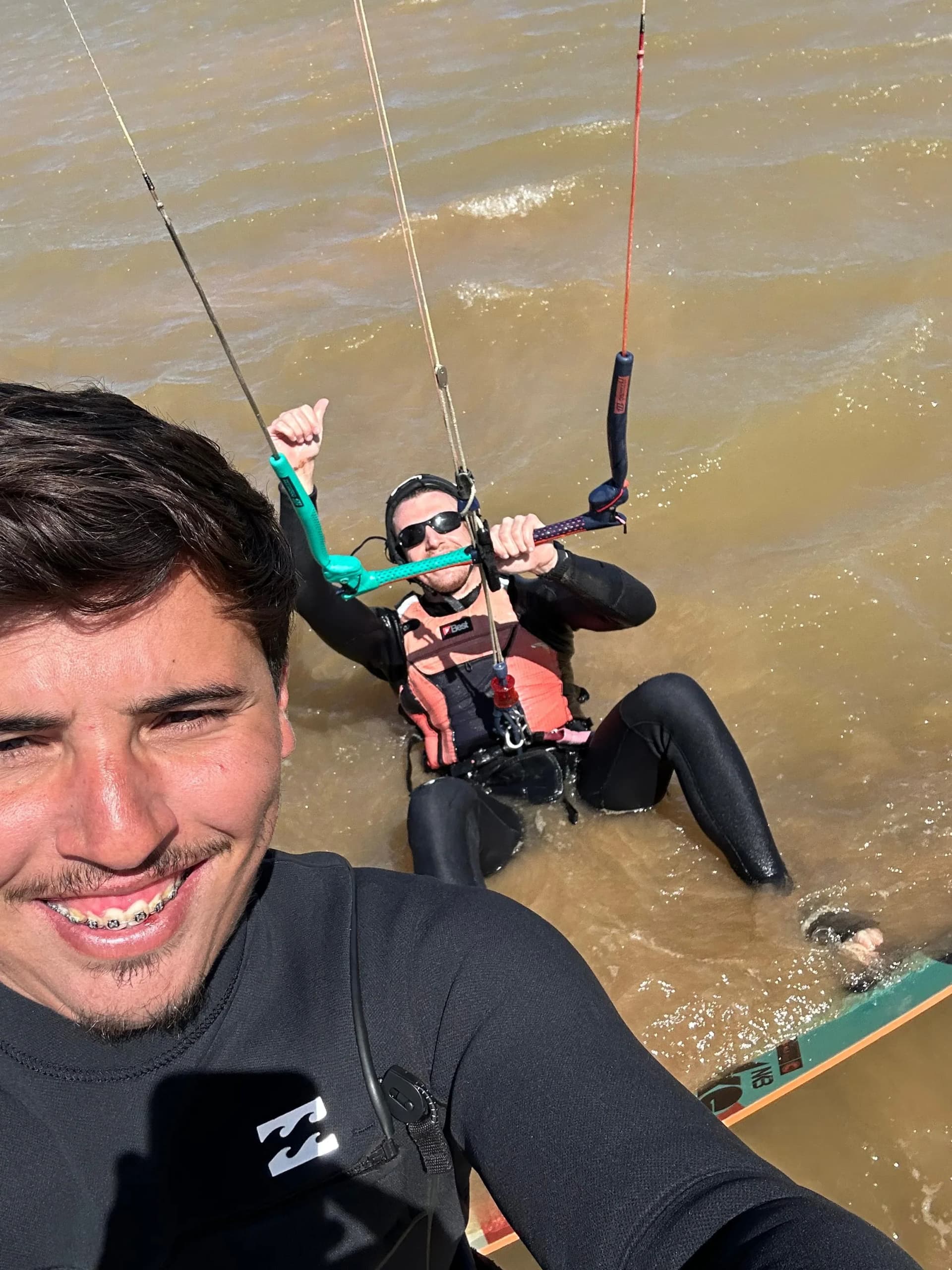
Kitesurfing has more foundational steps than most watersports before a rider can go out independently, which raises a fair question for anyone with limited time: what can two days actually achieve? This guide is built around answering that honestly — what a 2-day kitesurf camp in Essaouira typically covers, what it realistically doesn't, how the short format is usually structured hour by hour, and who should book two days versus stretching to a longer course instead.
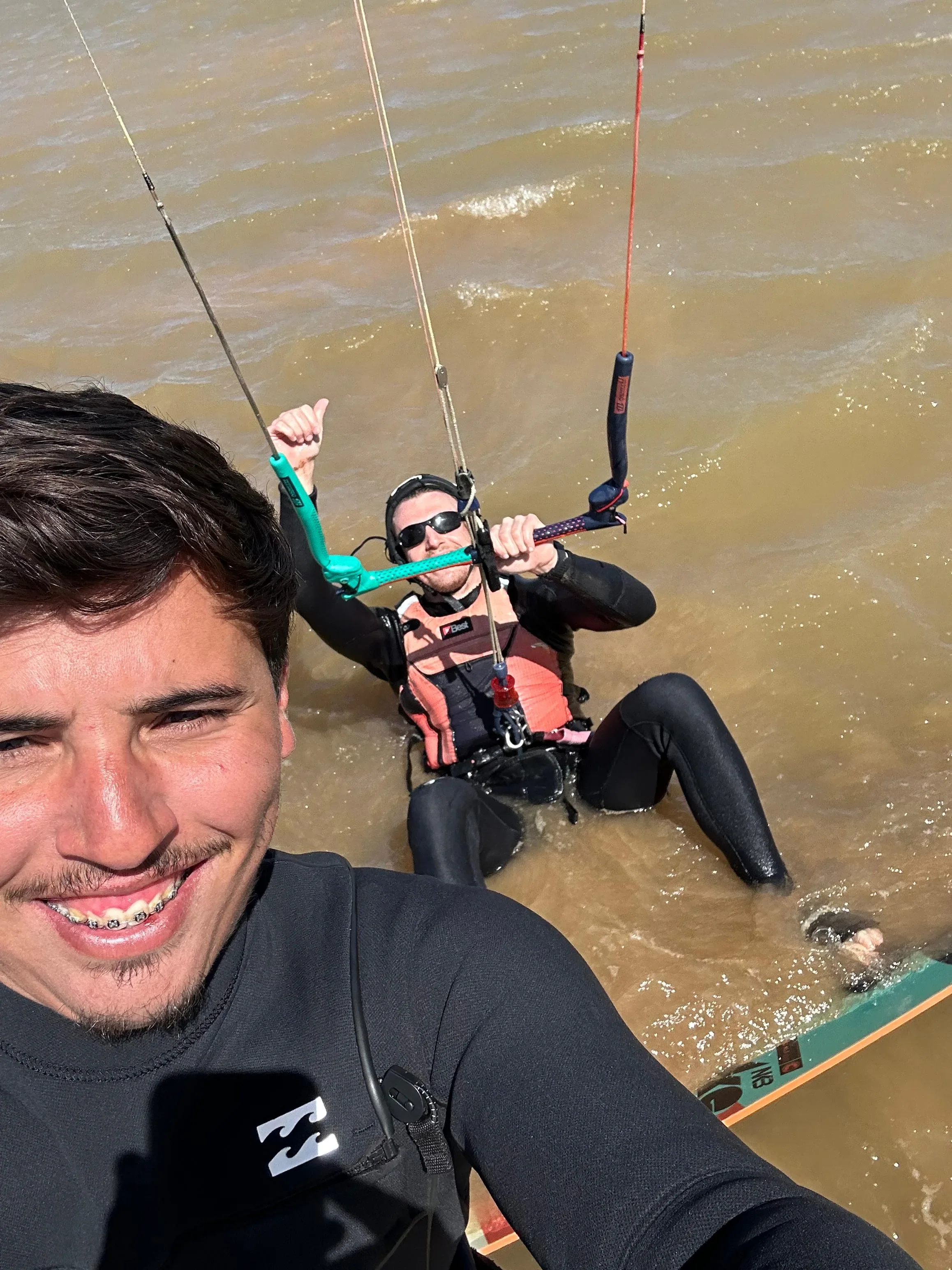
Setting Honest Expectations First
A 2-day format is not enough time to reach independent riding — that's worth saying plainly rather than glossing over. Independent riding, including confident self-rescue and safe kite launching and landing without supervision, generally takes closer to five days of structured instruction, sometimes more depending on the individual and the conditions that week.
What two days is genuinely good for:
- Testing whether kitesurfing appeals to you before committing to a longer, more expensive course
- Building real kite control on land and in the water, including body dragging and an introduction to self-rescue
- A first taste of the water start — some students get up on the board briefly by the end of day two, though this varies a lot by individual and by wind conditions that weekend
- A confidence check for someone who has already done some kite instruction elsewhere and wants a refresher before continuing independently
What two days is not designed for:
- Reaching independent, unsupervised riding ability
- Guaranteed consistent board starts — some students get there, others need more repetition, and two days doesn't leave much room for a slow start (a day lost to low wind, for instance) to be made up
- Learning to ride upwind reliably, which typically comes after board starts are already solid
A school that's upfront about this distinction — rather than implying two days will make you a rider — is generally the more trustworthy one to book with.
Hour-by-Hour: What a Typical 2-Day Format Looks Like
Because the format is short, a well-run 2-day camp tends to be tightly structured rather than loosely paced, to make the most of limited time.
Day 1
- Morning: Theory briefing — wind window, safety systems, how the quick-release and self-rescue work, and a walk-through of the gear you'll be using
- Late morning to early afternoon: Land-based kite flying with a training kite, focused on steering, generating and de-powering pull, and reacting to gusts — this is the foundation everything else depends on, and rushing it tends to slow the rest of the weekend down rather than speed it up
- Afternoon (once the alizé wind builds): First time in the water with a full-size kite, body dragging without a board — learning to use the kite for propulsion and direction, and practicing bringing the kite down safely
Day 2
- Morning or afternoon (timing depends on wind that day): More body dragging to consolidate control, followed by an introduction to the water start — getting the board on, finding the right body position, and attempting to stand up and ride using the kite's pull
- Remainder of the session: Repetition of water start attempts, with the instructor adjusting kite size, positioning, and coaching cues based on what's working and what isn't for that specific student
- End of day: A debrief on what was achieved and — importantly — a clear, honest recommendation on what a next step would look like if the rider wants to continue (a follow-up short course, a full 5-day program, or simply more supervised practice)
Weather and wind strength shift this schedule around in practice — a stronger wind day might move body dragging earlier, or a weaker one might mean more land-based practice than originally planned. A good instructor adapts the plan to conditions rather than running an identical fixed schedule regardless of what the wind is doing.
Why the Order of Skills Matters Even in a Short Format
It might seem like skipping straight to board starts would make better use of two days, but experienced instructors resist this for good reason. Kite control on land and body dragging aren't preliminary busywork — they're where a rider builds the reflexes that keep a board-start session productive rather than genuinely dangerous.
A rider who hasn't built solid land-based kite control tends to struggle with basic positioning once a board is added, which usually means more time spent recovering from mistakes than actually practicing the water start itself. In a two-day format where time is already limited, skipping the fundamentals typically produces a worse outcome, not a faster one.
Group Size Matters More in a Short Format, Not Less
With only two days to work with, the amount of individual coaching time each rider gets has an outsized effect on outcome. A group of four or five students sharing one instructor across two days leaves a fraction of the hands-on correction that a smaller group or semi-private format would.
When comparing 2-day camp options, ask specifically:
- How many students share an instructor during this specific 2-day program?
- Is it a fixed group, or does the school combine riders of different existing levels into the same session?
- Is there any dedicated one-on-one time within the two days, even briefly, particularly during the water-start stage?
For a format this short, a smaller group or a semi-private option is generally worth the extra cost if reaching a first successful water start matters to you within the two days.
Equipment for a 2-Day Camp
A short-format camp should still include full equipment for both days:
- Training kite for the land-based session on day one
- Full-size kite, sized appropriately to that day's wind strength and the rider's weight
- Twin-tip board, appropriately sized for a beginner attempting first water starts
- Harness, control bar, and safety leash
- Wetsuit appropriate to the season — lighter in summer, thicker (commonly 4/3mm) in the cooler winter months
Confirm whether equipment is bundled into the camp price or charged as an add-on, and whether the price includes a full second day of gear or only a partial-day rate — some short-format packages quote a lower headline price that doesn't reflect two genuinely full days of rental.
Accommodation: Is It Usually Included?
Some operators bundle a night's accommodation between the two days as part of a "2-day camp" package, particularly useful for visitors coming from Marrakech who don't want to travel back and forth. Others treat the two days as lessons only, with accommodation booked separately.
If accommodation is included, confirm:
- Distance from the beach and lesson meeting point
- Whether breakfast is included alongside the room
- Whether the room is shared or private, since this affects both price and how rested you are for day two
If it's not included, factor a night's stay into your overall budget comparison between operators — a camp that looks cheaper without accommodation may not actually be cheaper once you add a night's stay to a competitor's all-inclusive quote.
Who Should Book Two Days (and Who Should Book Longer Instead)
Two days makes sense for:
- Travelers with genuinely limited time who want a real introduction rather than skipping kitesurfing entirely
- Anyone testing whether the sport suits them before investing in a longer, pricier course
- Riders who've had some prior instruction elsewhere and want a supervised refresher on kite control and self-rescue before continuing independently
A longer format (typically 5 days or a full IKO course) makes more sense for:
- Anyone whose main goal is reaching independent riding ability by the end of the trip
- Riders who want reliable board starts, not just an attempt at one
- Anyone traveling specifically for kitesurfing as the main purpose of the trip, where the extra days are worth the investment for a genuinely different outcome
A straightforward way to think about it: two days is an honest introduction and a way to test interest; five days (or more) is what it typically takes to leave with an independent, transferable skill. Compare with our 8-day kitesurf camp guide or read the full kitesurfing Essaouira complete guide.
What Drives the Price of a Short Format
- Group size — semi-private or smaller-group 2-day formats cost more per person than large-group options
- Whether accommodation is bundled — a package including a night's stay will naturally cost more than lessons alone
- Equipment inclusion — confirm full two-day rental is included rather than a partial allowance
- Season — peak summer dates, when wind and demand are both higher, sometimes price differently from shoulder-season weekends
Questions Worth Asking Before Booking a 2-Day Camp
- Realistically, what should I expect to achieve by the end of two days, given typical conditions this time of year?
- How many students will share an instructor during this specific program?
- Is a night's accommodation included, and if so, what's the room type and distance to the beach?
- Is full equipment (training kite, full-size kite, board, harness, wetsuit) included for both days?
- If wind is too weak on one of the two days, is the missed time rescheduled or simply lost?
A school willing to give a direct, honest answer to the first question — rather than an optimistic sales pitch — is usually the one worth trusting with a short format where time is genuinely tight.
Booking Around the Wind: Timing Your Two Days
Because the entire format depends on getting usable wind across both days, timing matters more here than for a longer course, where a single weak-wind day is easily absorbed into a bigger schedule.
- Season: Booking within the April–October window, when Essaouira's alizé is at its most consistent, meaningfully improves the odds of getting two genuinely usable wind days rather than one strong day and one lost to calm conditions
- Flexibility: If your travel dates allow even a small buffer, ask the school whether they can shift your two days by a day in either direction based on the forecast — some operators offer this informally, and it can make a real difference to outcome
- Backup plan: Ask what happens if one of the two days turns out unsurfable — whether it's rescheduled, refunded, or whether the school offers a substitute activity (a surf lesson instead, for example) for that day
None of this guarantees perfect conditions — no operator can control the weather — but a school willing to build some flexibility into a short, wind-dependent format is generally showing you they understand what actually matters for this specific package to be worth the money.
It's also worth checking whether the school tracks a longer-range forecast (several days out) rather than only the day-of conditions — this small operational detail often separates schools that plan proactively around the wind from ones that simply react to whatever shows up on the day.
Final Thought
A 2-day kitesurf camp in Essaouira is a real, worthwhile introduction to the sport — not a shortcut to independent riding, and any operator implying otherwise is setting the wrong expectation. Used for what it's actually good for — testing interest, building genuine kite control and safety fundamentals, and getting an honest read on how quickly you personally pick up the water start — two days in Essaouira's reliable wind is a solid, low-risk way to find out if kitesurfing is worth pursuing further on a future trip.